Thursday, February 09, 2012

OUR TRIP TO KERALA - FINALE

BACK TO KOCHI


We left kumarakom on our way back to Kochi, thus completing a full circle. We reached the outskirts of Kochi after a drive of about two hours. We stopped at "Fort Kochi" which is an area of water-bound regions located towards the south-west of mainland Kochi. It is famous for its Jewish quarter, the Dutch Palace and the "Chinese fishing nets" - the last introduced (Wikipedia)by the Chinese explorer Zheng He . 

A TYPICAL CHINESE FISHING NET

According to Wikipedia, the Chinese fishing nets are fixed land installations for an unusual form of fishing — shore operated lift nets. Huge mechanical contrivances hold out horizontal nets of 20 m or more across. Each structure is at least 10 m high and comprises a cantilever with an outstretched net suspended over the sea and large stones suspended from ropes as counterweights at the other end. Each installation is operated by a team of up to six fishermen. The system is sufficiently balanced that the weight of a man walking along the main beam is sufficient to cause the net to descend into the sea. The net is left for a short time, possibly just a few minutes, before it is raised by pulling on ropes.

Among all the common wealth countries of the world, the Jewish Synagogue, Kochi is the oldest existing synagogue. The prosperous Jewish trading community built it in 1568 AD.

The Jewish Synagogue, Kochi

In the mid 18th century, the clock tower was attached to the main building of the synagogue. The interior of the Jewish Synagogue at Kochi is adorned with Belgian chandeliers and grand lightings. 
After a quick lunch, we visited the "Kerala Folklore Theater and Museum", which contains unique works of art and ancient artifacts of Kerala, all apparently collected by one man. This museum turned out to be a veritable treasure trove and is strongly recommended for a visit.

Close Up - Kerala Masks
General View of the Mask Display


Ornate Wooden Ceiling & Chandeliers

Tanjore Style Paintings

Painting of Kathakali Dancers


The visit to the museum brought us to the end of our trip. It only remained to drive to the airport for our return flight. It was a very pleasant drive with coconut palms and greenery all around us.

After and hour or so, we arrived at the Kochi Airport and said Goodbye to our chauffer who had been our constant companion for about a week and had shown us so many beautiful things.

Cochin Airport (Image: www.cochinairport.org)

We checked in at the airport and boarded our flight after some time. We felt sad at going but silently made up our minds to return to "God's Own Country" someday.

Tuesday, February 07, 2012

OUR TRIP TO KERALA - PART THREE

ON TO KUMARAKOM !


We left Periyar at 9 am on the next leg of our trip, which would take us to Kumarakom. It would take about 3 hours and the drive was once again to be downhill. Kumarakom is an internationally famous tourist destination for its backwaters fringed with coconut palms.

The Kerala backwaters are a chain of brackish lagoons and lakes lying parallel to the Arabian Sea coast of Kerala. They consist of a network of interconnected canals, rivers, lakes and inlets, a labyrinthine system of over 500 km of waterways. There are many resorts around the backwaters and one can also stay in houseboats, which can be as luxurious as one wants.

Map of Kerala Backwaters
(Wikipedia)
We had planned to stay at a houseboat which would take us for trips all over the Vembanad lake, which is one of the largest lakes on the backwaters, covering more than 200 square kilometres. We passed through the bustling town of Kottayam and soon found ourselves at the landing stage where our houseboat was anchored.

Over the next 24 hours, we stayed in the houseboat and went on an extended tour of the lovely backwaters, including the Vembanad lake.


Our Houseboat "Shivam"
Living Room
Setting Out on the Cruise
Lovely Patterns of Nature


A Large Houseboat on the Vambanad Lake

Serenity
A Tourist Resort on the Backwaters


Moored Houseboat - Early Morning Scene


A Cruising Houseboat


God's Own Country

After cruising the backwaters the whole day, we returned to the anchorage in the evening. After spending a comfortable night in the houseboat, we went out again for an early morning cruise and returned at about 9 am. 

It was time to go, We thanked the staff of the houseboat and got into the car for the final leg of our trip.

To be continued ..... 

Saturday, February 04, 2012

OUR TRIP TO KERALA – PART TWO


MORE ON MUNNAR

Apart from tea gardens, we found many beautiful flowers and ornamental plants in Munnar.

clip_image002 clip_image004
clip_image006 clip_image008
BREATHTAKING FLORA OF MUNNAR
clip_image010
THE TEA MUSEUM - MUNNAR

At the “Tea Museum” run by Tata Tea showed we learnt the tea manufacturing process demonstrated with a running pilot plant. We bought some processed tea of different types from the counter at the museum.

Later we stopped by a local dam with a huge lake behind it. Poor light prevented us from taking pictures here. By afternoon It started raining, not a torrential downpour but rather a thin, cold drizzle. The temperature dropped suddenly and we wanted to return to the shelter of our hotel which was located high on a mountaintop. We drove up a winding road and suddenly found fog creeping up from the valley floor.

clip_image012

FOG OVER THE TEA GARDENS

clip_image014

MIST COVERING THE HOTEL IN THE AFTERNOON

The next morning, we found that the fog disappeared as soon as the sun came up and the fantastic valleys with hundreds of green trees and mountain ranges stretching away to the horizon could be seen from the hotel window. Photography cannot do justice to nature’s infinite variety. Moreover, it was shot through a thick glass pane. Still, I think it gives some idea of the natural beauty of Munnar.

clip_image016

THE ROLLING HILLS OF MUNNAR

It was now time to say “Goodbye” to Munnar. Regretfully, we got in for the next leg of our trip, which would take us to the heart of the spice country.


THEKKADY, HERE WE COME !

The drive to Thekkady was all through hilly terrain. The roads were quite steep though most of the time, we were going downhill at a fast pace and holding our breath as we negotiated yet another hairpin bend.. After about 3 hours, we reached the town of Thekkady where a lot of the spices, for which Kerala has been famous for centuries, are grown. There are numerous farms which grow spices and sell them to tourists. We went round one of them and bought some pepper, cardamom, cinnamon and some essential oils extracted from different plants and trees like Eucalyptus.

Near Thekkady lies the famous Periyar Wildlife Sanctuary. Set high in the ranges of the Western Ghats is the Periyar National Park and Tiger Reserve with a picturesque lake at its heart. Formed with the building of a dam in 1895, this reservoir meanders around the contours of the wooded hills, providing a permanent source of water for the local wildlife. Though it’s a tiger Reserve, tourists come here to view elephants, wild buffalo, wild boar, Sambar deer and very rarely, a tiger. We were told that the tiger population has come down to about 40 today.

Our hotel was fortunately located right inside the forest area very close to the wildlife sanctuary. In fact we saw a sambar deer near our hotel. There are excellent double decker launches for tourists onerom which one can comfortably observe wildlife as one cruises on the tranquil waters of the reservoir. This is, of course, subject to the weather. If it rains, it is impossible to see any animals.

clip_image018

THE LANDING STAGE FOR THE LAUNCHES AT PERIYAR

clip_image020

WILD ELEPHANTS

clip_image022

HERD OF WILD BUFFALOS

To be continued …..

Friday, February 03, 2012

OUR TRIP TO KERALA - PART ONE


PREAMBLE TO THIS POST
I have not contributed to this blog for some years now. This was not intentional. Life at the workplace had been, as they say these days, challenging when I was close to retirement. I retired in 2008 and relocated to my home town, about 1,500 km away. Putting down roots in a new place always comes with its own set of problems and it took us time to find our feet. Immediately after that, we had to shift again, this time in the same area where we lived but to a new house. Relocation we found was relocation, whether it was 1,500 km away or in the same town. We had to go through the process once again. At the end of it all, my wife and I were tired but contented at having settled down at last. One more factor was that, in the last 6 years, we were blessed with two lovely granddaughters. These were welcome events but needed a lot of travelling and consequent dislocation since our son and his wife live abroad.
Now at last I have started picking up the threads of my life on the net and that brought me to “My Page”, which is, of course, one of my blogs. I hope to be fairly regular this time and publish more posts with some degree of regularity. My readers, please bear with me.
OUR TRIP TO KERALA:
I am devoting this post to a short account of our trip to Kerala, a state in Southern India, popularly known as “God’s Own Country” on account of its scenic beauty. Our trip was fairly short and was devoted to visiting areas of interest in and around Cochin, or Kochi as it is called today.
My wife and I flew down by a morning flight to Kochi. We could see a coastline fringed with coconut palms from the air. The airport building at Kochi was beautiful – it was constructed in a traditional Kerala design- with lovely red sloping roofs covered with faux tiles. It was not a monolithic building but split into small sections, each with its own share of red roofs. All in all, it was a welcoming sight offering a traditional welcome to the visitor.
A map of Kerala state is given below. The map shows the different districts of the state. Kerala is divided into 14 districts. Kochi lies in the Ernakulam district. Our trip took us to various places in the adjoining districts of Idukki and Kottayam.
We stayed overnight at Kochi and started by road the next morning. Our destination was the hill town of Munnar, known for its cool weather and picturesque tea gardens. On the way we saw the famous Hill Palace which was built by the Rajas of Cochin in 1865. Today it houses a museum with many fine relics including precious stones and jewellery. Unfortunately, photography inside the palace is prohibited. I can only give a picture of the palace taken from the outside. The gardens surrounding the palace have rare medicinal plants.
clip_image004
We started going uphill shortly after the Hill Palace and shortly passed some lovely waterfalls, one of which is shown here.
clip_image006
We passed through winding roads with many hairpin bends, all the time steadily going up till at last we came to a very green area with tea gardens on all sides. The bluish hills stretched away to the horizon. It was a lovely sight.
We had finally arrived at Munnar.
Munnar town is in the Kannan Devan Hills ( KDH ) Village and is in the Idukki district of Kerala. The region in and around Munnar varies in height from 1,450 meters (4,760 ft) to 2,695 meters (8,842 ft) above mean sea level. Munnar enjoys a salubrious climate with the temperature ranging from 5-25 °C in winter and 15-25 °C in summer.
Munnar is essentially a tea town. Tea cultivation was introduced to Munnar in the colonial times back in the 19th century and tea gardens now cover almost every hillside. The green tea bushes are a lovely sight. Towards the afternoon, fog starts to creep up from the valleys and covers the hilltops too in a very short time. It is a sight to see. I share a few pictures of the tea gardens of Munnar with you.
The tea leaves are plucked mostly by women and they can be seen working here. The tree plant is not a bush although it appears like that in the photos. The plants are deliberately pruned to get a good crop of leaves. Each tea plant has an economic life of about 40 years.
The next picture shows the afternoon fog creeping up the valley. Fog can be seen in the morning too (next picture) but usually goes away as the sun comes up.
clip_image004[4] clip_image006[4]t


To be continued .....

Friday, January 27, 2012


THE STORY OF HOW A PICTURE OF THOMAS MUNROE CAME TO ADORN THE WALLS OF A HANUMAN TEMPLE NEAR CUDDAPPAH

By Rukmini Banerji, 'The Hindu', Sunday 03.08.08.


PHOTO: V GANESAN
Surprising inroads: A statue of Thomas Munroe in Chennai.

It was dark. Cuddapah was still quite far away. The gently sloping road ahead seemed to go on and on. “There is a temple on the way,” said one of our companions. “We must stop there. It is a small temple but a temple with an interesting story.”
The legend was that as Ram and Sita made their way back from Lanka to Ayodhya, Hanuman went ahead. He would search for a good place for the royal couple to stop and rest on their journey home. Not far from where we were was one such place. Hanuman had chosen a cave by the side of a river. To mark the spot, Hanuman hung a golden rope across two hill tops. So that from a distance the rope could be seen. The story continues. Ram and Sita did indeed stop at the cave. Grateful for Hanuman’s efforts, Ram etched a picture of Hanuman on the stone walls of the cave.

Centuries later
Hundreds of years later, in British times, Thomas Munroe was the Collector of Cuddapah. Travelling through the hills, late one night, he saw a gleaming rope of gold stretched from one hill top to another. “What is that” he asked his companions. “Why is there a golden rope hanging from one hill top to another?” There was a long silence. No one among Munro’s companions spoke. No one could see the rope that Munroe was referring to. No one had the courage to speak. Finally, an elderly man spoke up. “He who can see the golden rope is blessed. But he will die in a few months.” Thomas Munroe looked at his companions in disbelief and put the story aside as superstition. But it must have stayed with him. It is said that he even wrote about this incident in his diary. In a few months time, Munroe was dead.

We stayed silent. We could not see any golden rope over the river. The dark hills passed us by. Our thoughts going back and forth: the mythical story of Hanuman and the unlikely fate of Munroe. In some time we came to the temple. A small glow of light in the darkening night. There were hardly any people in the temple. A few priests were conducting the evening aarti.

It was easy to walk right into the inner sanctum of the temple. There was a carving of Hanuman on the stone walls. Parts of the carving had been covered in silver. Till today, Hanuman’s service to Ram was being acknowledged, celebrated and worshipped.

Taking his place

Out in the main hall, a few people sat on the floor listening to the aarti. High above on the walls were framed pictures. Most were of gods and goddesses. In the centre, prominently displayed was one of Ram and Sita. The glass framing the picture had been smeared with holy ash, haldi and kumkum. There was a garland of fresh flowers encircling the frame. Right next to Ram and Sita was a framed picture of Thomas Munroe. Like the gods and goddesses around him, he too was covered in haldi-kumkum and crowned with flowers.

Saturday, September 13, 2008


Munro and Shri Raghavendra Swamy

Shri Raghavendra Swamy is revered as a great saint all over southern India. It is said that he had miraculous healing powers and also granted the prayers of his devotees. He was born in 1601 in Bhuvanagiri in Tamil Nadu. His temple and Math stand even today at Mantralayam in the Kurnool district of Andhra Pradesh.
The story goes that, when he wanted to leave the world, he asked his devotees to construct a ‘Brindavan’ around and over him. He sat there playing the veena and singing the Kannada hymn ‘Indu enege Shri Govindha’ in raga Bhairavi invoking Lord Krishna to dance before him. He then controlled his breathing and a Brindavan was constructed as he had wished, placing 300 ‘Saligramas’ over his head. It is believed that he is alive inside the Brindavan, performing miracles.
In 1800, when Sir Thomas Munro was the Collector of Bellary, the Madras Government ordered him to procure the entire income from the Math and Mantralaya village for the state. When the revenue officials were unable to comply with this order, Sir Thomas himself visited the Math for investigation. He removed his hat and shoes and entered the sacred precincts. Legend says that Shri Raghavendra Swamy then emerged from the Brindavan and conversed with him for some time about the resumption of endowment. The saint was visible and audible only to Munro during this period. The Collector went back and wrote an order in favour of the Math and the village. This notification was published in the Madras Government Gazette in Chapter X! and page 213 under the caption ‘Manchali Adoni Taluka’. This order is still preserved in Fort St. George, Chennai and Mantralayam.

Sir Thomas Munro and His Thoughts on British Rule in India
Sir Thomas Munro was the Governor of the Madras Presidency during the British Raj. He was a person who understood the dynamics of British occupation of India and the role of the Company and the Crown in Indian lives.
Mr. Muthiah, the famed historian of Madras, quotes Sir Thomas’ comments on British rule:
“Your rule is alien and can never be popular. You have much to bring to your subjects but you cannot turn India into England or Scotland. Work through, not in spite of, native systems and native ways, with a prejudice in their favour rather than against them; and when in the fullness of time, your subjects can frame and maintain a worthy Government for themselves, get out and take the glory of the achievement and the sense of having done your duty as the chief reward of your exertions.”
Sir Thomas was an able administrator, dealing with problems with compassion and justice. It is no wonder that villagers named their first son in his memory as ‘Munrolappa’. Even today, the city of Chennai pays tribute to this unusual ‘Empire builder’ with a equestrian statue right in the middle of Mount Road, as it emerges from the Fort.

Munro Miscellany
In 1820, he was appointed the Governor of Madras Presidency, where he founded systems of revenue assessment and general administration which substantially persisted into the twentieth century. His official minutes, published by Sir A. Arbuthnot, form a manual of experience and advice for the modern civilian.
An equestrian statue of him, sculpted by Francis Chanterey, stands in Chennai city. Sitting proud and straight on his horse, in the middle of Chennai’s famed Island, is ‘The Stirrupless Majesty’. Either due to an oversight, or depicting his affinity for bareback riding, Sir Thomas Munro’s statue shows him without saddle and stirrup.
The Tirupati Tiremala Devasthanams still hold a huge cauldron gifted by him called Munro Gangalam, in which food for Lord Venkateswara is prepared, even though Sir Munro never visited the temple.

Sunday, August 31, 2008


A TRAGIC  MUGHAL PRINCE

Dara Shikoh, whose death anniversary fell on August 30, was more than a Sufi-prince, scholar and translator. He was also a hands-on editor-publisher of translations


Every Indian who has ever translated a text into English owes something to a Mughal prince who lies buried in the compound of Humayun’s tomb in Delhi. The anniversary of his death, August 30, is a date we should remember with national melanchol y. The school-room facts are well known: in the struggle for the Mughal throne 350 years ago, Shah Jahan’s eldest son Prince Dara Shikoh was defeated, and brought to Delhi where he was led through the city in a disgrace-parade on an old and unwashed elephant.


Chief charge

What is significant for us today is not that there was a war for kingship — in itself nothing unusual — but that one of the chief charges Aurangzeb brought against the rightful heir was that in publishing the Majma-‘ul-Bahrain (The Mingling of the Two Oceans) Dara had openly committed to the truth in Hinduism. Like his great-grandfather, Dara tried to bridge the gap between Hinduism and Islam. The Emperor Akbar had strongly believed that his Mughal nobles needed to understand their Hindu subjects and had set up a translation bureau to render the Ramayana, the Mahabharata and the Bhagavata into Persian. Prince Dara Shikoh went much further.

Dara Shikoh, whose name means “the glory of Darius”, was born to Shah Jahan and Mumtaz Mahal in 1615. He was the heir apparent and his father’s favourite son. As he grew up, and began to display very special qualities of scholarship and a deep interest in mysticism, which he researched relentlessly, it became clear that he was no ordinary man. In 1640 he was introduced to Lahore’s famous Qadri Sufi saint, Hazrat Mian Mir who had urged both Jehangir and Shah Jahan to be kind to all their subjects. In the same year, Dara published his first book, Sakinatul Auliya, a collection of biographical sketches of Muslim saints. His interests took a steep turn when he met Baba Lal Bairagi, a Hindu gnostic, conversations with whom he recorded in a little book entitled Mukalama Baba Lal wa Dara Shikoh.

He befriended Hindus, Sikhs and Christians and his spiritual explorations led him to a great cross-language venture. In seeking to find a common mystical language between Islam and Hinduism, Dara Shikoh commissioned the translation of many Upanishads from Sanskrit into Persian and even personally participated in some of these renderings. He believed in joint scholarship and, amazing though it sounds, encouraged by Dara, learned men both Hindu and Muslim, worked together. His translation is called the Sirr-e-Akbar (The Greatest Mystery) and in his Introduction he boldly states that the work referred to in the Holy Quran as the Kitab al-maknun or the “hidden book” is none other than the Upanishads. If his brother needed evidence against him, it is easy to see how Dara himself gave Aurangzeb sufficient material.


Famous work

Dara’s most famous work, Majma-ul-Bahrain (The Mingling of the Two Oceans) was also devoted to finding the common links between Sufism and Hindu monotheism. When it was published, the book sealed his doom and Aurangzeb used the conviction of religious groups and the ambition of political ones to overcome Dara, making out a strong case that he was unfit to rule. In June 1659, for his work in translating Sanskrit texts, Aurangzeb had Dara declared a heretic who deserved to die. Dara had already been defeated in battle and was Aurangzeb’s prisoner. In the end when his killers came for him, Dara was cooking a meal for himself and his young son. The deposed prince fought like a king, using a kitchen knife against the swords of his assassins. Just as the translators of the Bible into German and English met with fatal opposition, so too did the first translator of the Upanishads. He was buried without ceremony, his headless body dumped in a hastily dug grave.

A hundred and forty years after Dara Shikoh was murdered, his translation of the Upanishads, which had lain forgotten and unread, were translated into a mix of Latin, Greek and Persian by the French traveller Anquetill Duperon (1801) and was the very text that caught the attention of Schopenhauer who wrote those unforgettable words nine years later, “In the whole world there is no study so beneficial and so elevating as that of the Upanishads. It has been the solace of my life. It will be the solace of my death”. This sudden discovery of a vast body of literature in a sophisticated and advanced language that had remained unknown for so many centuries sent a tremor through the libraries of Europe and scholars there began to view India with new eyes.
In being the first to make the link between two entirely different — even hostile — traditions, it was the ideals and work of this Mughal prince that launched Indian thought in the Western world. The motives behind his linguistic border-breaches led to Dara’s ruin; but eventually, the translation of his translation formed the road to cultural ties between civilisations. The distinguished historian Sathyanath Iyer wrote, “He is to be reckoned among the great Seekers of Truth who can appeal to the modern mind.”

Sunday, April 01, 2007

ALL FOOLS' DAY

I just remembered that today is April 1, 2007 - popularly known as All Fools' Day ! However, and this is no hoax, something important happened today in India back in 1957. Decimal coinage was introduced and the old 'annas' and 'paise' were gradually phased out starting first April. Instead of 16 annas to a Rupee and 4 paise to an anna, it was now 100 'naya' (new) paise to a Rupee. The naya paisa was also gradually removed from circulation as it did not buy much and the metal value (it was pure copper) was higher than its value as a coin. This, of course, quickly started off a cottage industry with enterprising people melting down the coins to get copper metal for sale. Some other changes were that 4 anna coins became 25 paise and 8 annas 50 paise coins. Other coins introduced were the 5 and 10 paisa coins. With inflation rising in the country, even 25 paise coins are hard to find these days and 5 and 10 paisa coins have totally disappeared.

The decimal system of coinage was quickly accepted by the country as, of course, it was more convenient than the old system. Today, that system is just a memory.

Friday, November 03, 2006

HAPPINESS IS A VOYAGE


We convince ourselves that life is better once we are married, have a baby, and then another. But we get frustrated because our children are not old enough and tell ourselves that all will be well when they are older. Then we are further frustrated because they reach adolescence and we must deal with that. Surely we will be happier when they grow up – and so it goes on, with happiness a distant mirage, always awaited. We also tend to console ourselves with various thoughts such as life will be better when we get a new car, when we can take a vacation or when we finally retire.

The truth is that life is always full of challenges. There are always obstacles, an ordeal to get through, bills to be paid, work to be finished, etc., etc. It has finally dawned on me that these obstacles are life. This point of view has helped me to appreciate that there isn’t any road to happiness. Happiness is the road. So enjoy every moment – don’t sigh over the blessings of others, or their achievements or honours, because applause dies away, trophies gather dust and winners are soon forgotten. Remembered are those moments and those souls who were close by.

Another key to happiness is genuine concern for others. Some time ago, at the Seattle Olympics, nine athletes, all mentally or physically challenged, stood at the start line for a 100 metres race. The gun fired and the race began. Nobody was actually running because it just was not possible in his or her condition but they had the spirit to participate and win.

Suddenly one boy tripped and started crying. The other eight stopped and came back. Then all nine walked shoulder-to-shoulder to the finish point. They found happiness in sacrificing their chance of winning so that their friend would not lose. The crowd applauded and the people who witnessed it still talk about it as a great moment.

Life is short and it is important to help others win, even if it means slowing down and reducing our own chances in the race of life.

Happiness finally seems to be within our grasp.

Based on a feature (‘Inner Voice’) in the ‘Hindustan Times’ dated Nov. 03, 2006.

Sunday, October 15, 2006

A PICTURE OF MY GRANDDAUGHTER


Today's post is just a photograph of my grandaughter, Nayantara, now 3 months' old. Isn't she a beauty ?

Saturday, October 07, 2006

Of Life and Death

It’s been a long time since I posted anything on my page. In fact, the last one was on the 9th July, 2006. Well, a lot has happened since then in our family, both good and bad. This post will, therefore, be solely confined to family matters. First, the good news. A daughter was born to my son Ujjwal and daughter in-law Aditi on the 15th of July. My wife and I were overjoyed at the arrival of our granddaughter. However, we could not see her immediately as my son lives in the Netherlands.

We were planning a trip to that country. However, before that could materialize, we had to rush to Delhi to be with my mother in-law, who had been fighting cancer. The disease had been confirmed when she had had an abdominal operation to remove a non-functional kidney. She took the news very calmly and went through the radiation treatment as the doctor suggested. Chemotherapy was not done in view of her age – 83. However, her condition started to deteriorate from July, soon after the radiation sessions were over. Her food intake gradually decreased till she could not eat more than a few spoonfuls in one day. She faced much pain, especially in her bones, but also in the rest of her emaciated body. There was no effective medication. There was not much that could be done except to make attempts to give her some relief from the excruciating pain. She bore the pain very bravely. She remained in a state of drugged stupor in the second half of August. With not much nutrition by mouth, she grew progressively weaker. She did not want to be fed by any other interventionist approaches. We knew it was a question of time. The end came on the 1st September. An era ended with her passing. She was one of those rare people who gave generously of herself but never asked for anything in return. For us, she was a tower of strength and love who knit the family together. Her house will never be the same again.

We went to the Netherlands after the funeral. We are there at the moment and enjoying every moment as we watch the antics of Nayantara, our granddaughter, almost three months old now. Her sweet smile soothes us and takes away a lot of the pain of the last few months. We all wish that we could have shared these moments with Ma. I cannot help thinking that, in the midst of life, we are in death.

Mother, we will miss you.

Sunday, July 09, 2006

TIBETAN MONKS AND FOOTBALL

The World Cup fever has gripped the monks of Tibet as well! A recent newspaper report says that at Tibet’s holiest shrine, young monks are getting up at 3 a.m. – not to pray, but to watch the World Cup matches.

Lights flickered in the windows of the Potala Palace, former home of the Dalai Lama, as France beat Portugal this week to set up a final showdown on Sunday, 9th July, 2006, against Italy. It was reported that the monks watched on a 54-cm colour TV, drinking Coca Cola and eating instant noodles.

Lobsang, a 27 year old monk said, “ I get very excited, very happy, when I watch the games because I get to see a lot of the famous players.” Like many of the 83 monks at the Palace, Lobsang goes by only one name.

Tibet’s Buddhist monks are not encouraged to play soccer, though they are allowed to watch.

All this, of course, is a long way from the time when Lhasa was known as the Forbidden City and hardly anyone had seen the Potala Palace, let alone the Dalai Lama. But then, this is the 21st century!

Monday, June 05, 2006

ONE FOR THE ROAD

My son recently sent me a link to the following news item which I found most interesting. It will certainly appeal to those thirsting for adventure. I reproduce the item in toto (well, almost) from the website which anyone interested can visit at: http://www.indianarc.com/

THE WORLD'S MOST BIZARRE MOTOR SPORT- ENDURANCE AUTORICKSHAW RACING, Aug 21-28, 2006
Be part of history and don't miss the birth of a new motorsport. The Indian Autorickshaw Challenge is a 1000km (590 miles) rally through the most scenic roads of southern India in a three-wheeled motorized vehicle. The race is open to everyone regardless of experience, nationality, and age. The organizers will provide rickshaws. You'll have 2 days to prepare your vehicle before the start.

Friday, June 02, 2006

A REMARKABLE PHOTOGRAPH

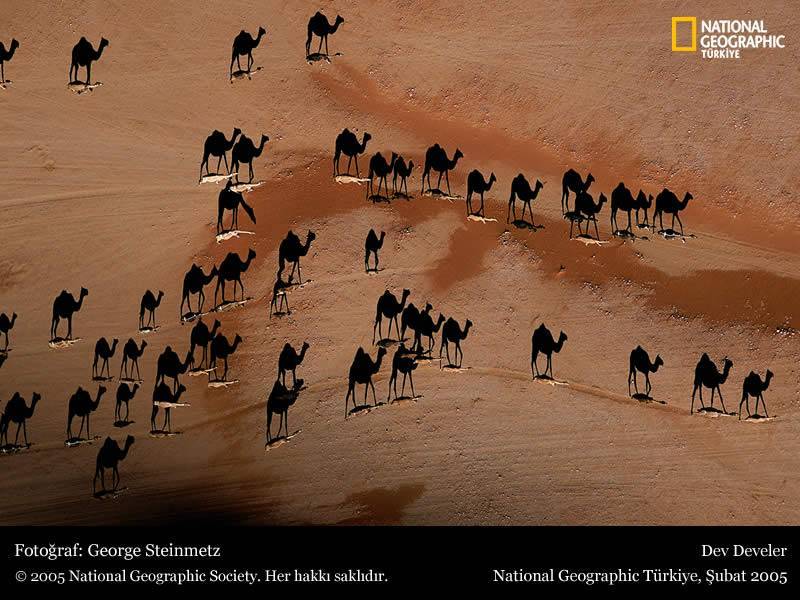
If you look at this picture very carefully, you can notice that Black ones are shadows, white ones are the real camels... The snap has been taken from above......... Simply unbelievable!

Wednesday, May 24, 2006

FIFTY YEARS OF INDIAN IMMIGRATION TO THE USA

Fifty Years Ago.

Did you know that the quota existing for Indian immigrants to the USA in 1954-55 was only 100 per year! A newspaper report says that, the number of Indians migrating to the USA between July 1, 1954 and June 30, 1955 was 116, inclusive of 33 persons who entered that country as non-immigrants and whose status was later adjusted to that of immigrants. This point was discussed in the Lok Sabha on May 22, 1956. One of the members asked the concerned minister whether India proposed to move the US for a ‘little increase in this quota’. The minister replied, ‘As far as we know, even this quota of 100 is not filled up every year’!
Read on for the current situation………


With Mexico being the undisputed Numero Uno in immigration to the United States, both legal and illegal, the battle rages on for claiming second place honors for the coveted Numero Dos award. And the current leader is—India.The Department of Homeland Security (DHS) and its Office of Immigration Statistics (OIS) in the USA keep tabs on immigration statistics with their annual yearbooks released at the end of each fiscal year. The latest offering from September, 2004, shows India winning the battle for second place in naturalized American citizens. [Yearbook of immigration statistics for 2003 -- PDF, page 134]:

“Mexico was the leading country of birth for persons naturalizing in 2003, accounting for 56,093 new citizens. Other major countries of birth for persons naturalizing in 2003 were India (29,790), the Philippines (29,081) Vietnam (25,995), the People’s Republic of China (24,014). . .”

Source: http://www.vdare.com/mann/050228_indians.htm


Friday, May 12, 2006

THE INDUSTRIAL SCENE IN INDIA - A HUNDRED YEARS AGO


I found the following details from a most unlikely source – the ‘Prabuddha Bharata’ magazine published by the Ramakrishna Mission! Here are the facts, selected from the issue dated May, 1906:

Breweries: 23, Cotton mills: 132, Distilleries: 20, Flour mills: 34, Ice factories: 47, Ironworks: 28, Jute mills:34, Mica works: 12, Oil mills: 56, Paper mills: 10, Potteries: 13, Rice mills(including those of Burma): 26, Saw mills: 28, Silk factories: 16, Sugar factories: 17, Tanneries: 17 Tobacco factories: 11, Woolen mills: 7.

Well, at least we had some industries back in 1906!

Thursday, April 27, 2006

MISCELLANY

THE GOOD SAMARITAN

In these days of the ubiquitous bottled drinking water, the following news item published recently in the ‘Hindu’ made me blink:

From a Railway Board circular of 1956 directing “Authorities of all railway stations in the country to look out for philanthropic gentlemen in their respective localities who will volunteer to supply drinking water during summer to passengers travelling by trains. The railway authorities will supply them with utensils for the purpose.”

ILL WIND

From a newspaper report:

The Dutch police have confiscated the saxophone of a busker who played so badly his audience complained. He performed at the railway station at Leiden, and had been reportedly told to leave.